| ChinAfrica |
| A New Urban Life |
| China accelerates urban renewal to build smarter, more liveable modern cities |
| By Li Xiaoyang | VOL. 18 January 2026 ·2026-01-06 |
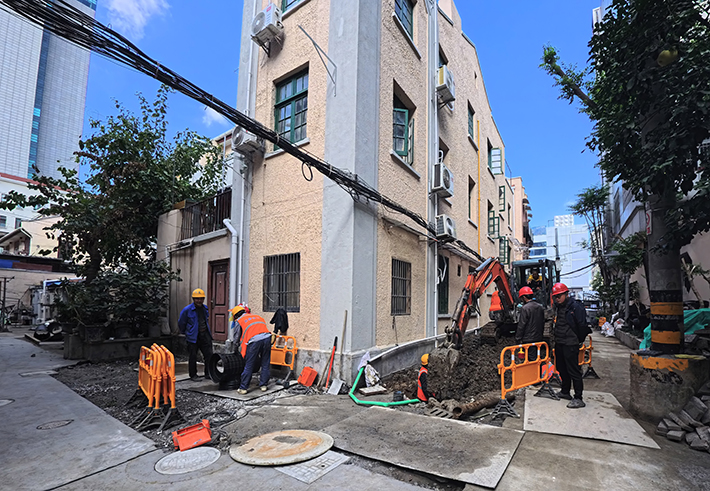
A sewage pipeline renewal project is under way in a neighbourhood in Shanghai on 31 October 2025 (XINHUA)
The long-standing use of portable toilet cubicles by residents of Shanghai’s narrow, labyrinthine alleys came to an end in September 2025 after the city largely finished building public toilets to make up their lack of sanitation facilities. The project, targeting 14,082 households, started last year.
In early November 2025, the city advanced its push to become smarter. It is expanding public digital infrastructure to facilitate people’s lives, with services ranging from providing reliable Internet access outdoors to installing intelligent kiosks to assist elderly individuals who become disoriented or lose their way.
Shanghai’s endeavours are part of the national drive of urban renewal. Data from the Ministry of Housing and Urban-Rural Development this year showed that during the 14th Five-Year Plan (2021-2025) period, China commenced renovation of over 240,000 old residential communities, benefiting 110 million people in 40 million households.
Old urban residential areas have been enhanced through improving infrastructure like elevators and street lights, and installing smart services. According to the ministry, the renovated communities across China have installed 129,000 new elevators, added over 3.4 million parking lots and built 64,000 facilities for elderly and child care.
The recommendations for formulating the 15th Five-Year Plan (2026-2030), adopted at the Fourth Plenary Session of the 20th Communist Party of China Central Committee from 20 to 23 October 2025, outline key development priorities for the country during this period - including advancing urban renewal and building innovative, liveable and smart modern cities.
According to Yun Shuang, deputy director of Tsinghua Tongheng Urban Planning and Design Institute, China is at a point where enhancing the urban living environment is essential. In the new phase, urban renewal is key to high-quality urban development.
“The recommendations prioritise empowering cities with innovative approaches, suggesting that innovative transformation is urgent for current urban development in China,” Yun said.
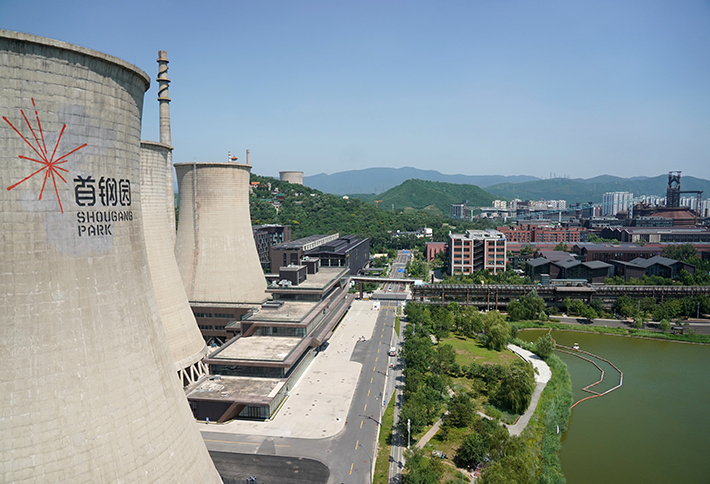
A view of Shougang Park in Beijing on 11 August 2025 (XINHUA)
Making cities smarter
As technological and economic growth drive smarter urban development, Chinese cities are moving up in the rankings of the International Institute for Management Development’s Smart City Index, the latest of which was released in April 2025. Beijing ranked 14th in this year’s index and Shanghai climbed four places to the 15th position.
According to the report accompanying the index, Chongqing and Hangzhou, capital of Zhejiang Province, have both made notable smart city progress over the past three years.
In Shanghai, tech companies are empowering the city’s smart transformation. Based in the city, Keenon Robotics, a leading embodied service robot company with products available in over 60 countries and regions, has introduced diverse products ranging from humanoid robots to delivery robots. According to the company, its humanoid embodied service robot XMAN-R1 began use at the Shangri-La hotel at Hongqiao Airport in Shanghai in October 2025.
In Shenzhen, Guangdong Province, smart services have become part of daily life. Drones can deliver food within 10 minutes of ordering, and robots deliver meals directly to rooms at hotels. There are also self-driving buses running on planned routes.
Today, many cities in China have established digital urban management platforms. Chongqing’s digital urban operations and governance centre acts as the city’s “super brain,” enabling comprehensive monitoring, in-depth analysis and precise management across multiple sectors - including water, electricity, and gas supply systems; telecommunications; and critical infrastructure such as bridges, tunnels and pipelines.
More liveable
Megacities like Shanghai and Beijing have been improving their living environments through urban renewal, addressing issues resulting from dense populations, old buildings and narrow alleys.
In the early 1990s, per-capita living space averaged just 6.6 square metres in Shanghai due to inadequate urban planning and population growth. Since traditional architectural designs did not include private sanitation facilities, all residents of an alley had to rely on one public restroom.
In one alley in Jing’an District, just four public restrooms were shared by over 100 residents. Starting in 2005, the district started a 20-year renovation project for this large residential area, including demolition and rebuilding of old buildings and improvement of facilities. Unused space within the neighbourhood has been used to expand the number of restrooms to nearly 40.
After the “toilet revolution” in Shanghai, households in renovated communities now enjoy private bathrooms, or see improved outdoor restrooms. Facilities including canteens, nursing homes and gyms have also been opened.
According to the municipal authorities, Shanghai renovated 136,000 square metres of old residential buildings, benefitting 4,697 households in 2024.
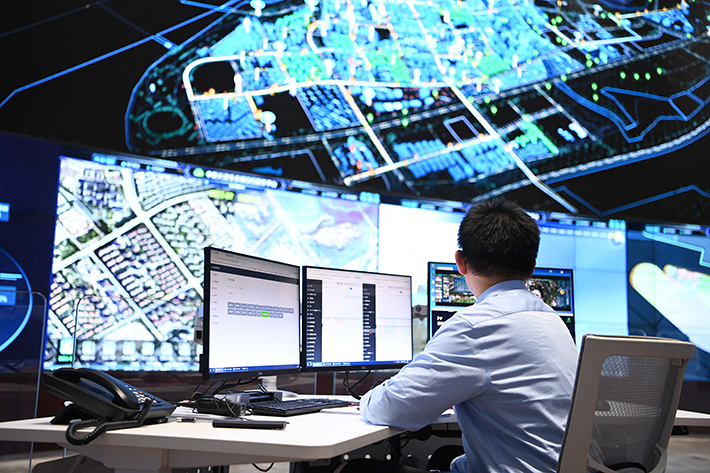
A staff member monitors urban management at a smart city centre in Tianjin on 27 September 2024 (XINHUA)
Renovation for a new life
In the Xicheng District of Beijing, the historical Baitasi (White Stupa Temple) Neighbourhood has gone viral on social media platforms in recent years, turning into a landmark for people following the trend of city walking.
The new look is the result of years of renovation. Before the project began in 2015, private indoor space was so limited that vibrant daily life spilled out into the hutongs. Passersby could see residents cooking, playing mahjong, cycling through or chatting outside. A tangle of electrical wires overhead and household belongings spilling into the alleys added to the clutter, making the narrow lanes feel even tighter.
In 2015, Baitasi Neighbourhood began embracing urban renewal. The project tackled old-city renewal challenges by introducing innovative policies for residents to relocate voluntarily with compensation or sign lease agreements with businesses moving into the neighbourhood.
The renewal in the neighbourhood has improved housing conditions for 1,230 households, unleashed 37,000 square metres of space and renovated facades of buildings. It has also completed underground relocation of power lines, eliminating the once densely packed wires above the roof, according to the Beijing Municipal Government.
The renovation of abandoned industrial sites also breathes new life into wasteland. In west Beijing, visitors enjoy the grand views of steel furnaces at Shougang Park, which has been transformed from a steel mill into a multipurpose leisure and events destination.
While the steelmaking operations in Beijing were halted in 2010, the industrial site has been revived through renovation. Deserted workshops, plants and furnaces were repurposed into a zone where technology firms thrive alongside destinations for entertainment, expos and athletic competitions.
Last year, the Shougang Park Blast Furnace No.1 SoReal Science Fiction Paradise opened to the public. At the sci-fi park visitors can try their hands at virtual reality games like skydiving or flying planes. A café built from a deserted furnace has become a popular destination.
Up and up
According to the Ministry of Housing and Urban-Rural Development, China will continue to promote urban upgrading during the 15th Five-Year Plan period (2026-2030). Efforts will continue to improve living environments, ensure rental housing access, advance urban renewal and improve urban governance.
Yun suggested cities involve spatial planning from the initial stage of projects to enhance feasibility. Urban renewal is shifting from demolition to enhancement based on original structures and the new round of transformation should focus on improving weak points, Yun said.
“The local governments need to play their roles in boosting demand, encourage the participation of private investment to vitalise the market and explore distinctive, innovation-driven city development approaches,” Yun said.
|
||
| About Us | Contact Us | Advertise with Us | Subscribe |
| Copyright Beijing Review All rights reserved 京ICP备08005356号-5 京公网安备110102005860号 |


