| ChinAfrica |
| Science and Solidarity |
| What drought-prone Burkina Faso can learn from China’s irrigation systems |
| By Roukiatou Aline Beniwende Pamtaba | VOL. 18 January 2026 ·2026-01-06 |
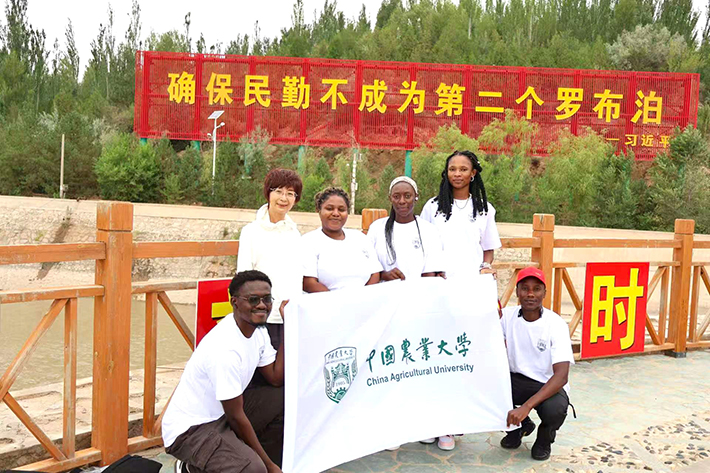
China Agricultural University students pose for a group photo at an observation and research station in Wuwei, Gansu Province, on 1 July 2025 (COURTESY)
As part of my master’s programme in resource use and environmental science at China Agricultural University, I had the privilege of joining a study trip to the Shiyang River Basin and its surrounding areas from 17 to 21 July 2025. This trip to Gansu Province was organised under the China-Africa Joint Centre for Agricultural Demonstration and Training in Arid Regions programme, an initiative aligned with President Xi Jinping’s call for deeper China-Africa cooperation. The four-day trip aimed to expose both national and international students to advanced water management practices, innovative agricultural technologies, and the cultural identity of this desert region.
More than just an academic visit, my brief stay in this remote area of north-western China became a genuine revelation of how science, state planning, and public mobilisation can transform arid regions into productive and sustainable landscapes.
In this desert region, I observed how precision irrigation systems were sustaining crops under water-stressed conditions. I also saw how organic and inorganic fertilisers were combined to optimise both soil fertility and crop yield. These innovative practices could be adapted in the northern part of Burkina Faso, my home country, which experiences irregular and low rainfall - around 400 mm per year. Construction of small reservoirs, localised irrigation systems, and sustainable fertilisation could transform the lives of thousands of farmers by enhancing their resilience to climate change.
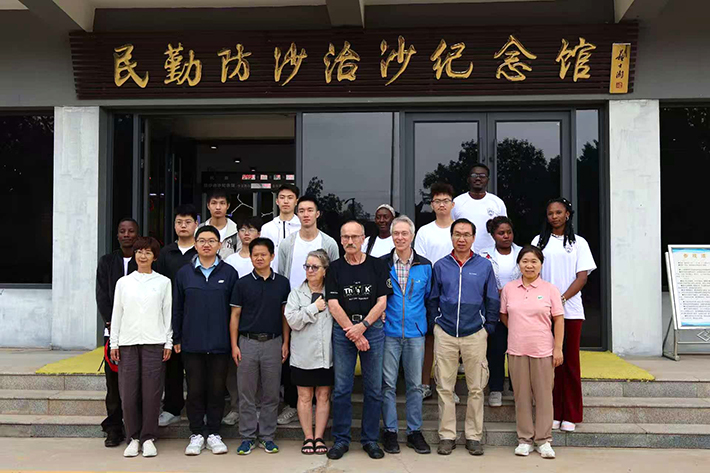
A memorial dedicated to desertification prevention and control is set up in Minqin County, Gansu Province (COURTESY)
Collective efforts
In Minqin County, I was impressed by the community’s reforestation efforts. Through collective commitment and the use of drought-resistant species, vegetation cover has increased by more than 12 percent. This achievement highlights the power of a community united around a shared goal: restoring their environment. It immediately brought to mind the ambitions of Burkina Faso’s President Ibrahim Traoré, who emphasises environmental sovereignty, agricultural development, and community reforestation. Like China, Burkina Faso possesses the human potential and determination to reverse land degradation.
Drought is one of the most pressing challenges facing West Africa today. Its frequency and intensity are increasing due to the combined effects of climate change, soil degradation, and rapid population growth. The consequences are severe: dwindling soil fertility and crop yields are undermining livelihoods, driving migration, and causing social instability. According to the World Bank, over the past few decades, the frequency of extreme droughts has risen by 23 percent, with each event capable of reducing GDP per capita by about one percentage point.
It was in response to this problem that the High-Level Forum on Defying Drought in West Africa was held in Ouagadougou, Burkina Faso, at the end of September 2025. Co-organised by the World Bank Group, Burkinabe government, and International Institute for Water and Environmental Engineering, the forum brought together hundreds of participants. The discussions focused on four major themes: drought monitoring, proactive water management and storage, landscape and agricultural conservation, and resilience financing. This initiative reflects a strong commitment to a collective and coordinated response to a scourge that knows no borders. Drawing inspiration from China’s experiences in this field could clearly provide significant practical value.
China’s agricultural modernisation also impressed me, particularly the vast areas of state-supported greenhouse cultivation. These facilities enable year-round production and provide farmers with stable incomes. Adapting a similar model to the Burkinabe Sahel holds great promise: small-scale greenhouses, paired with drip irrigation and local compost, could transform vegetable and food production, helping to advance food self-sufficiency.
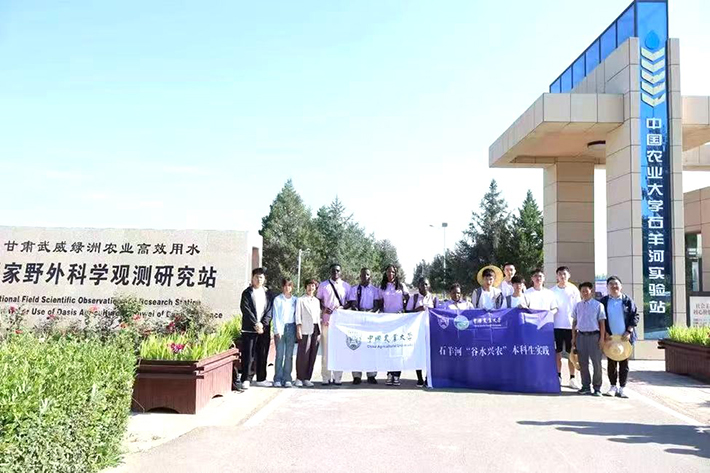
China Agricultural University students visit the Hongyashan Water Reservoir in Gansu Province (COURTESY)
Community commitment
Beyond technology, it was the community spirit of the people of Gansu that moved me most. From researchers to young volunteers, everyone shares the same commitment to their land and their future. I discovered a China where science and solidarity go hand in hand. This approach mirrors President Traoré’s vision for the transformation of Burkina Faso through popular participation, training young people in agricultural trades, and reviving productive patriotism.
This trip confirmed that sustainable agriculture depends not only on technology but also on a combination of political will, social discipline, and respect for nature. Burkina Faso can take inspiration from the Chinese model while preserving its own identity and expertise.
By combining the rigour observed in China with the vitality and solidarity of the Burkinabe people, our country can chart its own path towards food security, rural dignity, and collective prosperity.
The author is master’s Student of China Agricultural University
| About Us | Contact Us | Advertise with Us | Subscribe |
| Copyright Beijing Review All rights reserved 京ICP备08005356号-5 京公网安备110102005860号 |


