| ChinAfrica |
| A Journey Beyond Imagination |
| Discovering the silent beauty and profound lessons of Zhangjiajie, where nature and humanity meet in quiet harmony |
| By Getahun Assefa | VOL. 18 February 2026 ·2026-02-12 |
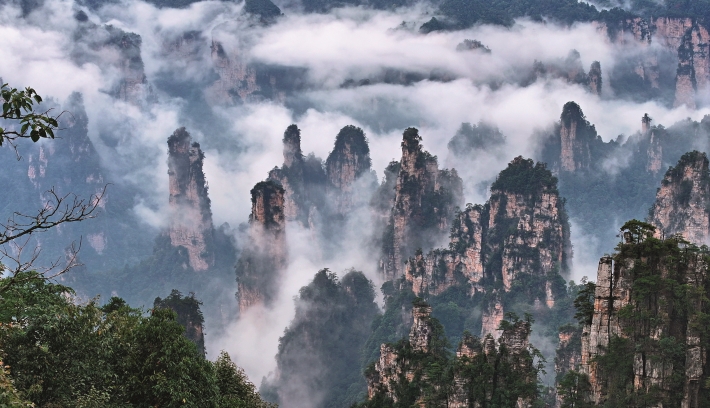
A view of Zhangjiajie National Forest Park in Hunan Province on 14 October 2024 (XINHUA)
I was 26 the first time I travelled to China, and even now, it feels like an unexpected chapter in my life. The opportunity came out of the blue. I learned, just a month before departure, that I had been selected for a one-month professional training programme. The news ignited a wave of excitement. For nearly two weeks, I stayed up late into the night, imagining a country I had never seen, trying to picture what China might really be like, beyond the images in books, films and media.
Leaving Ethiopia for the first time felt surreal. The distance wasn’t just physical; it was mental too. China had always seemed like an idea - ancient, vast, disciplined, modern - but not a place I thought I would ever actually visit. Yet, there I was, full of curiosity, uncertainty and a sense of eagerness I couldn’t shake.
The training programme guided us through a tapestry of cities, each revealing a different facet of China’s vast and intricate history. In Changsha, we stood before the towering statue of Mao Zedong and explored his former residence, sites thick with the weight of political and historical significance. We wandered through museums that told the sweeping tale of Chinese civilisation, illustrating how an ancient culture weathered turmoil, reinvented itself, and surged into the modern age. These experiences were valuable, providing essential context and deepening my understanding. Yet, none of it prepared me for the surreal beauty of Zhangjiajie.
A shift in rhythm
Zhangjiajie was not something I ever imagined could actually exist.
After days of structured learning and historical immersion, the journey to Zhangjiajie felt like a shift in rhythm. When the mountains finally appeared, rising abruptly from the earth, my first reaction was disbelief. The landscape looked less like nature and more like something from a dream. The sandstone pillars stood tall and narrow, defying instinctive expectations of balance, as if they had been carefully placed rather than shaped by time.
It was later that I learned how Zhangjiajie inspired the floating mountains in the film Avatar. Standing there, the connection felt obvious but extraordinary. The place does not need cinematic validation. If anything, the film borrowed from Zhangjiajie’s reality, not the other way around. No screen can replicate the sensation of standing beneath those formations, looking upward until your neck gently protests.
Although we spent only one day in Zhangjiajie, time felt strangely elastic. The mountains demanded attention, not only admiration. Walking among them slowed my pace and my thoughts. Even with carefully designed paths and steps, the terrain still felt formidable. Nature was not subdued; it was simply allowing access.
What struck me most was the quiet philosophy that underpinned the place. Zhangjiajie wasn’t designed to dazzle or entertain tourists; it felt as if it had been preserved with a deep, purposeful intention. Its true value seemed rooted in continuity rather than consumption - an understanding that some landscapes are meant to endure, not to be owned or displayed. The approach to conservation here felt rooted in respect, understanding that nature, in its purest form, should be protected and allowed to flourish long after we’re gone.
Throughout the trip, I was equally moved by the warmth of the people. Chinese hospitality wasn’t a performance; it revealed itself in simple, genuine acts of kindness. There was a real curiosity in how people engaged, a sincere desire to connect with someone from across the world. Even when words failed, smiles and gestures effortlessly filled the space, reminding me that kindness transcends language.
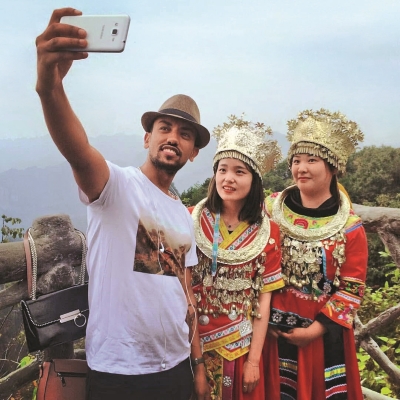
Getahun Assefa takes a selfie with locals in Zhangjiajie (COURTESY)
A source of wisdom
In Zhangjiajie, the warmth of the people took on an unexpectedly personal form. I found myself playing tennis with locals - an activity so ordinary, yet somehow extraordinary in this context. It was a fleeting, light-hearted moment, but it lingered in my mind long after. It encapsulated something profound about the place: amid the vast, awe-inspiring landscapes, human connection remained refreshingly simple and genuine.
Beyond the striking scenery and interactions, China itself felt like an ongoing revelation. A new culture, unfamiliar foods, shifting weather - everything was unknown, yet captivating. Meals introduced flavours I couldn’t immediately place. The climate required adjustment, and daily routines felt distinct. But none of it felt alienating. Instead, it piqued my curiosity and broadened my sense of possibility.
Zhangjiajie, however, was unlike any of these experiences. While the cities told stories of China’s progress and the museums chronicled its history, the mountains offered something far quieter. They communicated not through words, but through presence. They spoke of patience, endurance and perspective.
In that stillness, I found myself thinking about how rarely modern life lets us feel truly small. Zhangjiajie doesn’t overwhelm with grand displays; it does so with its presence. It doesn’t hurry you; it waits. And in that waiting, it changes you quietly, without force or fanfare.
Looking back now, after returning to China multiple times and even completing my master’s degree at the Communication University of China in Beijing, I sometimes ask myself a quiet, unsettling question: What if I had never been given that first chance to come here? The answer is never simple. I only know that I would have missed a depth of wisdom, perspective and lived experience that reshaped how I see the world and how I move through it.
As a journalist with the ability to reach millions of people in Ethiopia, these accumulated experiences matter. They enable me to contribute more meaningfully, to share perspectives shaped not by distance, but by lived understanding.
Zhangjiajie remains one of the most vivid memories of my first journey abroad - not because of its fame, but because of how it recalibrated my understanding of scale - of the world, of nature, and of myself at 26, standing far from home, discovering that reality can exceed imagination.
I’d recommend Zhangjiajie to anyone willing to pause, observe and recognise that some places are meant to be felt, not explained. It’s not just a spot to visit - it’s a place that leaves a lasting impression.
And long after the excitement of travel has faded, that lingering feeling becomes its most meaningful gift.
The author is Journalist, TV Show Producer and Host from Ethiopia
|
||
| About Us | Contact Us | Advertise with Us | Subscribe |
| Copyright Beijing Review All rights reserved 京ICP备08005356号-5 京公网安备110102005860号 |


