| ChinAfrica |
| Transformational Ties |
| China’s strategic investments are paving the way for Burundi’s growth and modernisation |
| ChinAfrica | VOL. 17 December 2025 ·2025-12-01 |
As Burundi seeks to modernise its economy, diversify exports, and strengthen industrial capabilities, its cooperation with China has become increasingly important. To understand current dynamics, challenges and opportunities in China-Burundi relations, ChinAfrica spoke with Benjamin Kuriyo, business journalist and director of the news platform burundi-avenir.org. He reviews the state of trade, progress in the energy and agricultural sectors, and the rise of digital technology and infrastructure, which are helping to define the country’s development trajectory.

Benjamin Kuriyo, business journalist and director of the burundi-avenir.org news website (COURTESY)
ChinAfrica: Burundi primarily exports agricultural products, while it imports Chinese manufactured goods and equipment. How balanced is this relationship? What can be done to promote higher value-added Burundian products?
Benjamin Kuriyo: The trade balance between Burundi and China remains heavily in China’s favour. In 2024, Burundi’s exports to China are expected to total approximately $7 million, while imports are projected to reach around $80 million. This disparity reflects the significant difference in the level of development between the two economies. China, as a global industrial powerhouse, imports relatively small quantities of Burundi’s primary products, such as agricultural goods and unprocessed raw materials, due to Burundi’s limited capacity for local processing.
Burundi relies on coffee to increase its exports to China. The two countries recently signed bilateral cooperation agreements to facilitate trade. The inaugural shipment, consisting of 38 tonnes of green coffee, was imported into China by Chinese company China Henan International Cooperation Group. The first shipments of raw minerals like amethysts and coltan were sent to China in October.
Since December of last year, Burundi has benefitted from the zero-tariff policy that China has extended to least developed countries, including those in Africa. This creates opportunities for the diversification of exports, including honey, essential oils, avocados and handicrafts, while also facilitating the development of new markets. Vision Burundi focuses on the modernisation of agriculture, industrial development, and the strengthening of the energy sector, with the goal of positioning Burundi as an emerging economy by 2040 and a developed nation by 2060.
Thanks to China’s support, the situation is improving. Burundi is acquiring new energy infrastructure, including the Ruzibazi Hydroelectric Power Station (15 MW), which is fully financed by China. With better energy availability and a favourable business climate, the country’s attractiveness will continue to grow, and more foreign investors will establish themselves in Burundi. Within 10 years, Burundi could be exporting more high-value products.
Improvements in infrastructure, particularly transport, are also crucial for consolidating the base of exportable products. In addition, Burundi has considerable horticultural potential, with notable exports including flowers, tropical fruits, and fish from Lake Tanganyika.
There are concerns regarding potential over-indebtedness caused by Chinese-financed projects. What is your perspective?
Burundi’s external debt situation remains under control. The country is not in a risk zone. The government is now focusing on developing the mining sector to increase revenue and attract investors. The new mining code provides a better framework for resource exploitation, particularly for nickel and other strategic minerals, and guarantees benefits for the country.
Additionally, most of the projects financed by China, particularly in infrastructure, health, and telecommunications, are structured as grants or fall within the broader framework of bilateral cooperation. This significantly mitigates the risk of accumulating excessive debt.
Furthermore, the country favours public-private partnerships over traditional debt. These win-win partnerships enable the mobilisation of foreign capital without increasing sovereign debt. In short, Burundi is not at risk of over-indebtedness. Its current debt remains sustainable.
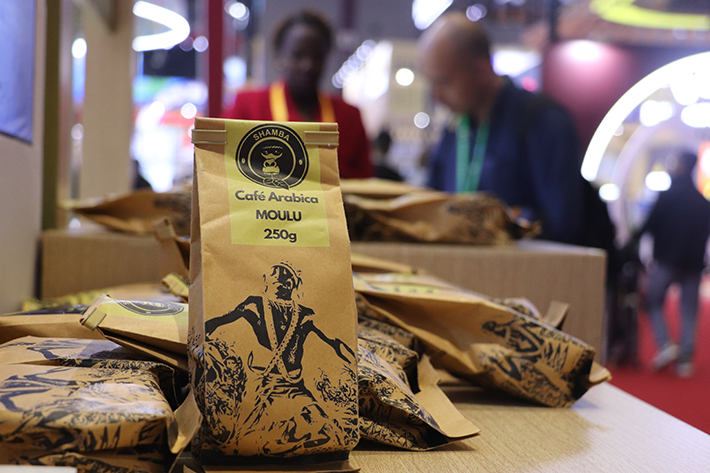
Burundian coffee is displayed at the eighth China International Import Expo in Shanghai on 5 November (HU FAN)
China supports Burundian agriculture through training centres and technical experts. What results have been achieved?
The outcomes have been promising, especially in rice cultivation. Chinese-funded demonstration centres have introduced hybrid rice varieties and modern farming techniques, leading to a surge in yields from 3 to 10 tonnes per hectare. Currently, 3,800 hectares are benefitting from these innovations, and cereal production is rising steadily.
Burundi is moving towards self-sufficiency in rice, thanks to the synergy between Chinese technical experts and Burundian agronomists. The Gihanga Agricultural Pilot Centre works hand-in-hand with local farmers, distributing improved seed varieties (rice, maize, and mushrooms) and supporting income diversification through poultry and rabbit farming. Farmers receive agricultural inputs upfront and repay after harvest, ensuring economic sustainability through cooperative models.
Beyond traditional sectors such as energy and agriculture, is there cooperation in emerging fields like digital and new technology?
Digital technology is becoming a part of bilateral collaboration. For Burundi’s nationwide radio and television broadcaster StarTimes is spearheading the digitalisation initiative. Signal reception kits are currently being marketed by a joint digital television broadcasting company. As part of the “Satellite TV Access for 10,000 African Villages” initiative, television studios have been upgraded, and decoders have been distributed to the population.
China’s expertise in telecommunications and e-governance might serve as an example for Burundi. In this sense, local telecom providers are receiving assistance from Chinese telecom behemoth Huawei in implementing high-speed Internet in rural regions.
Burundi has launched a railway project linking Tanzania’s Kigoma Region and Musongati in Burundi. What role does China play in this development and within the Belt and Road Initiative?
China is an invaluable infrastructure partner. The railway project, long awaited since the 1960s, is at last becoming a reality. Chinese companies - China Railway Engineering Corp. and China Railway Engineering Consulting Group Co. Ltd. - are leading the groundwork. This railway will streamline the transport of minerals and goods, substantially reduce logistics costs and help to position Burundi as a regional hub.
This expanding network of connections - road, air, and soon rail - embodies the spirit of the Belt and Road Initiative. It boosts regional trade and enhances Burundi’s integration into international markets. In short, China continues to support Burundi across key sectors - energy, agriculture, infrastructure, and digital - and promotes knowledge transfer and local capacity building.
| About Us | Contact Us | Advertise with Us | Subscribe |
| Copyright Beijing Review All rights reserved 京ICP备08005356号-5 京公网安备110102005860号 |


