| ChinAfrica |
| A Different Kind of Gold Rush |
| Chinese retail and wholesale chains are creating jobs and supporting local enterprise across South Africa |
| By Derrick Silimina | VOL. 18 July 2026 ·2026-07-01 |
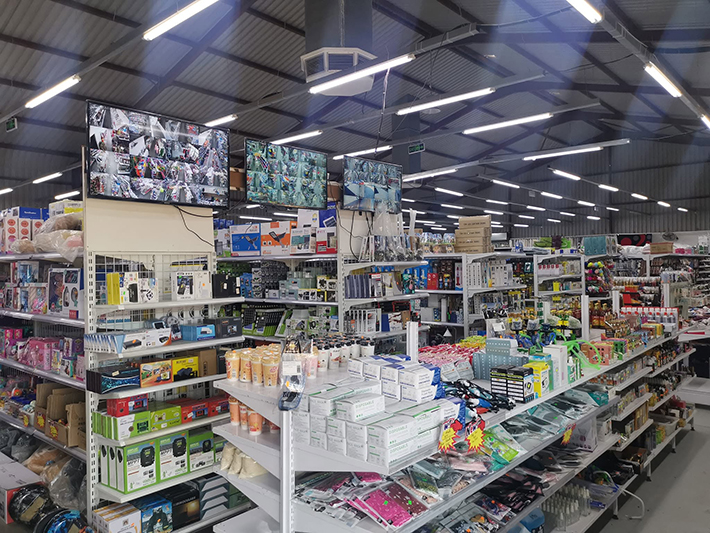
Groceries on display at a China Mart store in Hartbeespoort, South Africa (COURTESY)
As the sun rises over the Johannesburg skyline, a steady stream of young South Africans files into Chinese chain stores to begin the day’s work.
For Sbulele Nyati, China Mart is more than a workplace. Every box he unpacks represents school fees for his daughter and groceries he will carry home on payday.
“Whenever I go to work, I open the doors to a better life for my family. I am genuinely excited to have this opportunity,” Nyati told ChinAfrica.
As Chinese retail and wholesale chains expand across South Africa, Nyati sees himself as more than a store worker. He is a link between a global supply chain and the local job market. The wholesale and retail hub where he works, located in the Crown Mines area of Johannesburg, houses over 100 shops stocking a wide range of goods imported from China.
“At China Mart, I don’t just store and move stock. I help to move other lives forward. Every shift is a step towards a brighter future.”
With South Africa’s unemployment rate hovering around 31.4 percent, these hubs are being recognised not merely as bargain destinations, but as genuine entry points for young job-seekers into the formal economy.
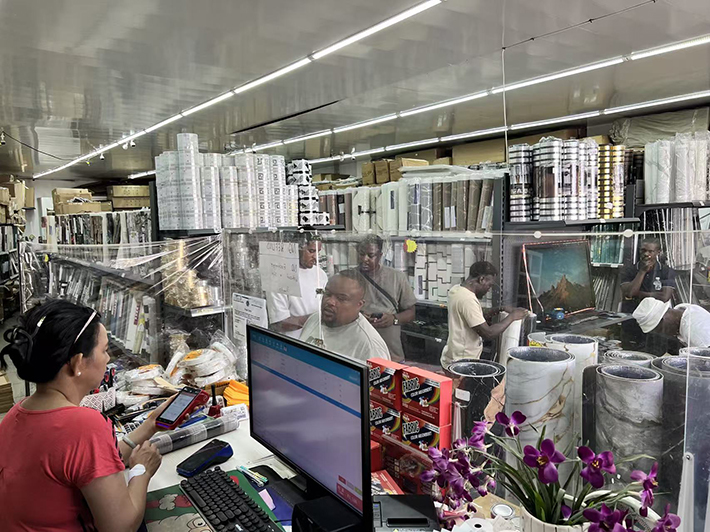
Local residents shop at a China Mall in Johannesburg, South Africa, on 31 March (NI YANSHUO)
The hustle inside the hub
For local entrepreneurs, Chinese-owned wholesale hubs like Dragon City and China Mall have become critical launchpads. The air inside is thick with languages: Mandarin, Zulu, English and Sotho blending into a single language of negotiation and commerce. Dragon City alone, often described as a reseller’s paradise, houses over 800 shops selling clothing, electronics, cosmetics and household goods at prices that make small businesses viable.
Young entrepreneurs move through the wide aisles with purpose, trolleys stacked high, the rattle of wheels on polished floors sounding like a drumroll of possibility.
“After the Tshwane Shopping Mall opened in Pretoria, it became a critical supply point for my spaza shop in Mamelodi Township,” Cathy Thebuho told ChinAfrica.
For Thebuho, the wholesale price is not just a number. It is her profit margin, her rent and her family’s security. She loads her trolley with bundles of clothing, each layer a step towards her goal of moving from a sidewalk stall to a proper storefront.
Nthombi Vuyokazi, who recently started work at a Chinese boutique near Langlaagte, is already building a name for herself. “With what I earn, I can support my family and save towards my dream of starting my own clothing line within two years,” she said.
Thabo Noluthando took a different route. A young man with a talent for electronics repair, he set up his own small business in downtown Johannesburg offering quick, affordable fixes. The low cost of phone accessories at China Mall and a steady flow of foot traffic have allowed him to make a living and reinvest in expanding his services.
“It’s a place where people from all walks of life come together to pursue their dreams,” Noluthando said. “We are finding employment, building skills and creating a brighter future for ourselves and our families.”
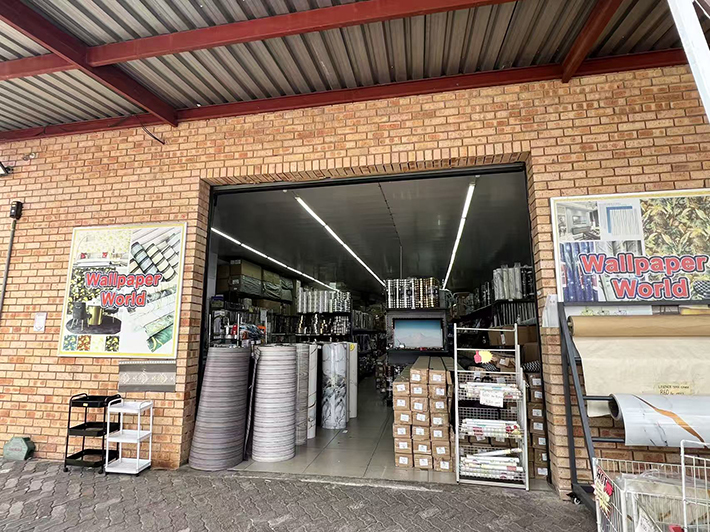
The wallpaper section of a China Mall in Johannesburg, South Africa, on 31 March (NI YANSHUO)
Counting the gains
Since Chinese traders began expanding across South Africa in the early 2000s, they have built networks that reach well beyond retail, supporting logistics companies, security services, maintenance contractors and global supply chains. The growth of these hubs has generated a significant multiplier effect across the broader economy.
The Chinese embassy in South Africa has disclosed that Chinese companies operating in the country have jointly committed to creating more jobs for local communities, particularly for young people.
“More than 200 Chinese enterprises have invested in South Africa, creating over 400,000 local jobs,” said Chinese Ambassador Wu Peng, adding that despite global uncertainties, China remains committed to multilateralism and building a community with a shared future. Bilateral trade between China and South Africa reached $53.58 billion in 2025, reflecting sustained economic engagement between the two countries.
As South Africa joins the global community in marking International Workers’ Day, under the theme “Restoring Dignity Through Opportunity and Protection,” Deputy Minister of Employment and Labour Jomo Sibiya called on the Chinese business community to make local hiring a priority.
“South Africa has an unacceptably high unemployment rate. I urge you to partner with us in putting South Africans first,” Sibiya said, addressing a gathering of Chinese business owners at China Mall in Amalgam, an industrial and commercial district west of the Johannesburg Central Business District.
| About Us | Contact Us | Advertise with Us | Subscribe |
| Copyright Beijing Review All rights reserved 京ICP备08005356号-5 京公网安备110102005860号 |


