| ChinAfrica |
| More Than a Marketplace |
| Yiwu’s rise from a poor rural county to the world’s supermarket shows how good governance and openness can create lasting economic opportunity |
| By Gao Mengran | VOL. 18 August 2026 ·2026-07-23 |
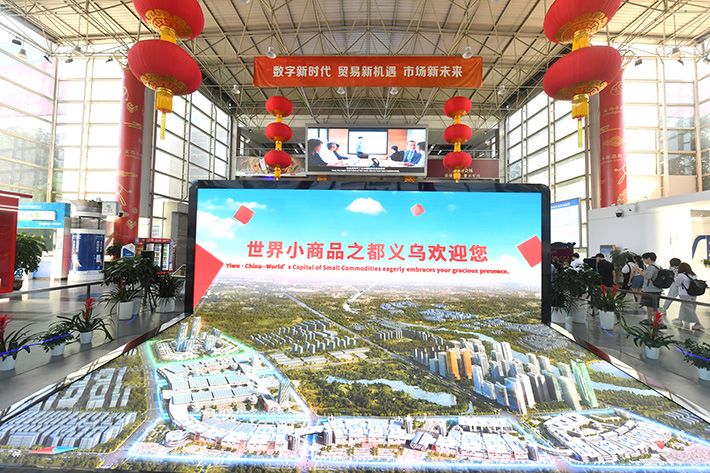
A view of Yiwu International Trade Market on 6 July (DONG NING)
For much of its 2,000-year history, Yiwu in central Zhejiang Province was an agricultural county. Barren soil and mountainous terrain left it among the province’s least developed areas. That began to change in the early 1980s, when Yiwu embraced market-oriented reforms and embarked on a period of rapid economic growth.
In 2005, the UN and the World Bank recognised Yiwu as the world’s largest wholesale market for small commodities. In little more than three decades, it had transformed itself from one of China’s poorest rural counties into a thriving global trading hub.
Yiwu’s remarkable transformation has been fuelled not only by entrepreneurial drive, but also by effective governance, an open and business-friendly environment, and a city that welcomes newcomers. Together, these strengths continue to attract young entrepreneurs from across China and around the world, helping Yiwu to retain its position as the “world’s supermarket.”
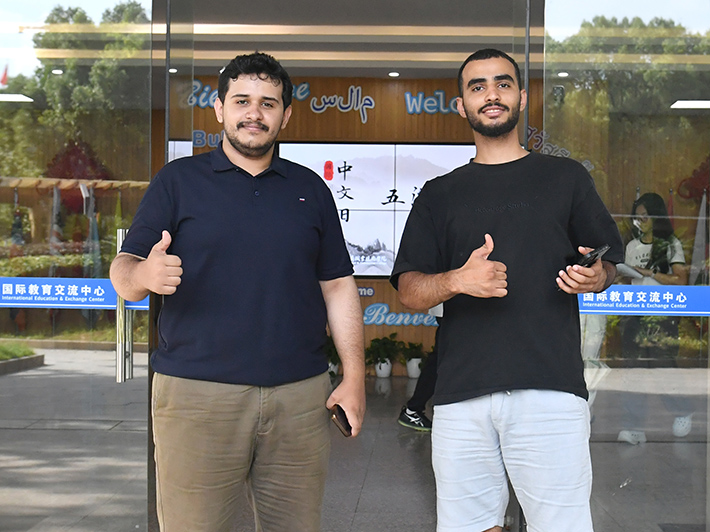
Two international students pose for photos at Yiwu Industrial and Commercial College in Yiwu, Zhejiang Province, on 6 July (DONG NING)
Governing a global marketplace
Rapid economic growth brought unprecedented governance challenges.
As Yiwu’s markets expanded, people from across China and around the world flocked to the city in search of opportunity. According to local records, Yiwu’s permanent population grew from 913,000 to 1.23 million during the first decade of the 21st century. By 2025, it had reached 1.94 million.
The growth in the number of international businesspeople coming to the city was even more striking. In 1989, only 27 foreign business visitors entered Yiwu. Following the opening of the first phase of the Yiwu International Trade Market in 2002, international arrivals surged. Between 2002 and 2008, the number of overseas visitors increased more than eight-fold to 266,000. By 2025, the figure had climbed to 681,000.
Merchants speaking different languages, practising different religions and representing diverse cultures converged on a relatively small city. Traditional approaches to urban governance were no longer sufficient.
Yiwu responded by developing a governance model that combines digital technology, community participation and social organisations. The approach encourages residents, businesses and overseas merchants to contribute to city governance while sharing in its benefits.
One example is the Yiwu International Trade Service Centre, where foreign merchants can complete a wide range of administrative procedures under one roof, from business registration and foreign exchange services to public services. Established in 2012, the centre reflects Yiwu’s commitment to efficient, business-friendly government services.
Digital governance has become another cornerstone of this approach. Since 2016, Yiwu has issued more than 300,000 Foreign Citizen Cards, often described by overseas traders as their “Yiwu identity card.” Beyond serving as identification, the card gives foreign residents access to many of the same public services as local citizens across 25 public services, including public transport, bicycle rental, library access, parking, healthcare and education.
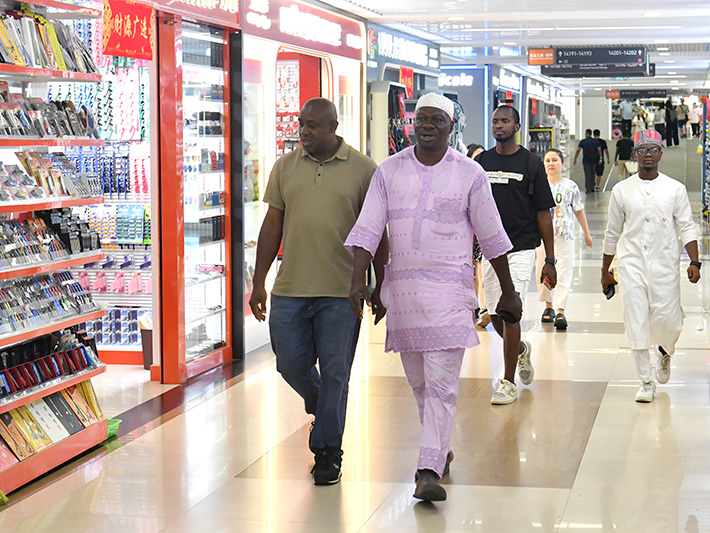
Foreign merchants visit the Yiwu International Trade Market on 6 July (DONG NING)
The card also links multiple government departments through a unified digital platform. In 2024, Yiwu launched the Yijing app, integrating 126 government, business and daily-life services into a single interface. Foreign residents can now complete many administrative procedures online instead of visiting multiple offices.
Technology, however, is only part of the equation. Recognising that effective governance ultimately depends on people, Yiwu has actively encouraged public participation.
An innovative mediation mechanism known as “foreigners helping foreigners” enables overseas volunteers familiar with both local regulations and their own cultures to help to resolve disputes among foreign merchants. Their shared language and cultural understanding often make communication easier while strengthening trust within the international business community.
Foreign merchants also participate directly in local governance. Since 2003, Yiwu’s People’s Congress has invited overseas business representatives to attend its annual sessions as observers and submit policy recommendations. Many of their proposals have subsequently been adopted, reinforcing the idea that foreign residents are valued contributors rather than temporary visitors.
Yiwu’s vibrant network of social organisations forms another pillar of its governance model. Outside work, residents take part in a wide range of community groups, including volunteer organisations, business associations, sports clubs, reading groups and hometown societies.
These organisations do more than organise recreational activities. They promote industry self-regulation, professional development, charitable initiatives and dialogue between businesses and government.
A city for young entrepreneurs
Good governance alone does not explain Yiwu’s enduring appeal. Equally important is its ability to offer affordable opportunities for young people.
Rather than competing with major metropolitan centres for highly skilled professionals through high salaries, Yiwu has pursued a different path. It lowers the barriers to entrepreneurship while providing comprehensive business services and a relatively low cost of living.
For ambitious young people with limited financial resources, the city offers an opportunity to start small.
Many entrepreneurs begin by working full-time while sourcing products from the wholesale market to sell at night markets or through online platforms in their spare time. For countless young people, this has become the first step towards building a business of their own.
Qingyanliu Village, often described as China’s first e-commerce village, illustrates this pathway. Many of its earliest online entrepreneurs were students at Yiwu Industrial and Commercial College. They used income earned from market stalls to launch online shops, with some achieving remarkable commercial success before graduation.
Housing also contributes to Yiwu’s entrepreneurial appeal. Unlike many large Chinese cities dominated by gated residential compounds, Yiwu is characterised by low-rise mixed-use buildings, where shops and warehouses occupy the ground floors and affordable rental apartments fill the upper levels.
Many foreign merchants who previously lived in larger cities such as Guangzhou and Wuhan say they value Yiwu’s shorter commuting times and lower living costs, which allow them to devote more time and energy to growing their businesses, expanding professional networks and acquiring new skills.
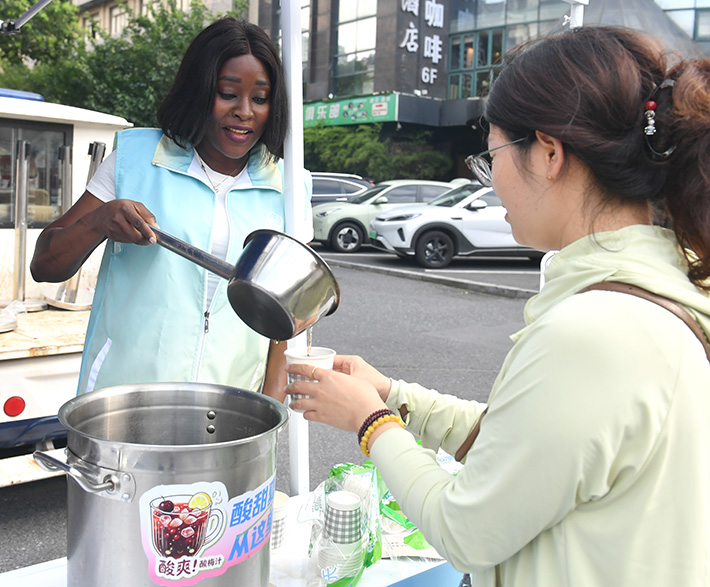
A foreign volunteer o ers cold drinks to passers-by at Jimingshan Community in Yiwu, Zhejiang Province, on 9 July (DONG NING)
Lessons beyond Yiwu
Yiwu’s experience has attracted growing international attention because many of the challenges it has addressed are shared by rapidly urbanising regions around the world.
According to the UN Economic Commission for Africa, African cities have expanded at an average annual rate of 3.5 percent over the past two decades, making the continent one of the fastest urbanising regions in the developing world.
Rapid urbanisation creates not only enormous opportunities, but also significant challenges. The World Bank estimates that around 12 million young Africans enter the labour market each year, while only about 3 million formal jobs are created.
Creating employment while maintaining social cohesion and effective governance has therefore become a central policy priority.
Yiwu’s transformation from a poor agricultural county into a global trading hub demonstrates that urban competitiveness depends not only on infrastructure and investment, but also on creating an environment where people from different backgrounds can build businesses, participate in public life and envision a better future. For cities seeking to balance rapid growth with opportunity and inclusion, Yiwu offers valuable lessons.
The author is research fellow from Research Centre for Cultural Development and Cultural Zhejiang, Zhejiang Institute of Administration
|
||||||||||||
| About Us | Contact Us | Advertise with Us | Subscribe |
| Copyright Beijing Review All rights reserved 京ICP备08005356号-5 京公网安备110102005860号 |


