| ChinAfrica |
| From Development Experience to Shared Development Futures |
| A commentary on the 2026 ISSCAD publication China’s Approach, Global Practice: A Decade of South-South Cooperation and Development |
| By Essam Sharaf ·2026-10-23 |
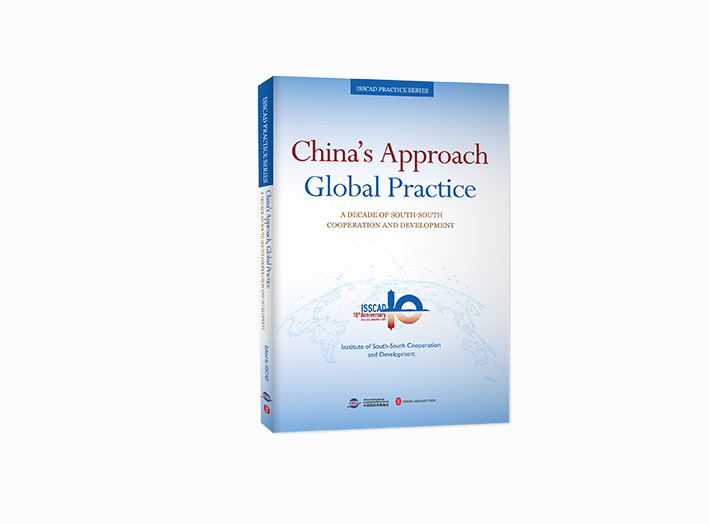
The book China’s Approach, Global Practice: A Decade of South-South Cooperation and Development published by ISSCAD
Over the years, one question has stayed with me: what does it really mean for a country to develop? We usually answer with figures - growth rates, investment, exports. These figures matter, of course. But I have seen enough to know that a rising economy does not necessarily mean that people have gained the skills, opportunities, or confidence to shape their future. To me, development begins when that possibility becomes real.
I had this question in mind as I read China’s Approach, Global Practice: A Decade of South-South Cooperation and Development. Published in 2026 for the tenth anniversary of the Institute of South-South Cooperation and Development (ISSCAD) at Peking University, it gathers 42 contributions from graduates from 24 countries of the Global South. What interested me was not simply the record of an institution’s first decade. It was the voices of people who had encountered China’s experience, thought seriously about it, and then asked a much harder question: what can we do with what we have learned when we return home?
These contributors are not writing from the comfort of theory alone. They are people who work in government, research, policy, and development. They know that a good idea can sound convincing in a classroom and still meet enormous difficulties in practice. That tension between hope and reality gives their reflections particular value.
China has been part of my own professional and intellectual journey for more than twenty years. I have visited many times, watched cities and industries change, and met people whose work helped me understand what lay behind the transformation. I have also become increasingly cautious about the suggestion that another country should simply follow China’s path. My question has always been different: what enabled China to achieve so much, and how might those lessons help us think more clearly about our own path? This book brought me back to that question.
Beyond the search for a model
When people speak about China’s development, they naturally point to what they can see: fast trains, new roads, factories, universities, expanding cities, and remarkable reductions in poverty. I understand that reaction. I have felt it myself during my visits. Yet I have often found myself thinking about what a photograph cannot show: the years of planning, coordination, training, adjustment, and institutional work behind those achievements.
There is no single secret to China’s progress. Long-term direction has mattered, but so has the willingness to try approaches, learn from experience, and change when necessary. Institutions and productive capacity have been built over time. Not every experiment succeeded, and China's history and circumstances are its own. We lose much of the value of its experience when we overlook that complexity.
This is where the contributors make an important point, sometimes explicitly and sometimes through their stories. Learning from another country is not the same as copying it. A policy may fit one place and fail in another. But we can still learn how problems were identified, how institutions worked together, and how decisions were revised when the first answer proved insufficient.
For me, that is the lesson worth carrying home. Development is not a collection of impressive projects. It is the ability of a country to recognize its priorities, bring people and institutions together, learn from mistakes, and continue moving forward. Building that ability may be more important than any individual project.
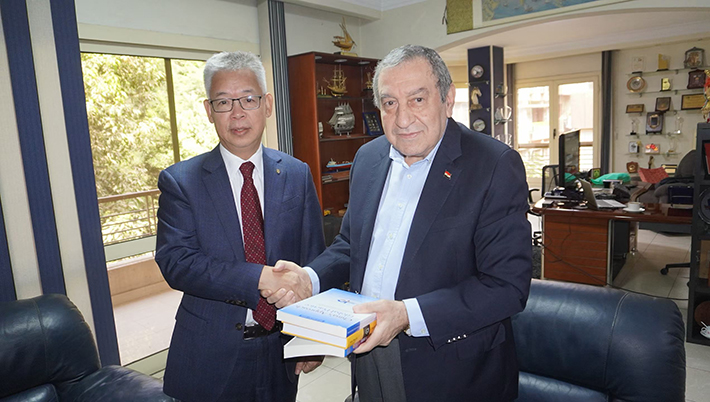
ISSCAS President Huang Yiping presents books to Essam Sharaf
From knowledge transfer to knowledge transformation
We often describe international cooperation by listing what one country provides to another: investment, technology, equipment, expertise. I do not underestimate any of these. But there is a difference between acquiring a machine and knowing how to maintain it, improve it, or one day make it yourself. There is a similar difference between hearing about a successful policy and having the confidence and institutional capacity to adapt it at home.
ISSCAD was initiated to address precisely this deeper challenge. Established in 2016 following President Xi Jinping’s proposal at the United Nations in 2015, it brings together study, research, policy dialogue, and firsthand exposure to development practice. According to the book’s foreword, more than 500 graduates from over 80 countries were trained during its first decade. I find those numbers encouraging. Still, I am even more interested in what happens to the graduates after they leave.
The book takes us into agriculture, industry, infrastructure, and public administration. It also reminds us that important learning often happens outside formal lectures: during a field visit, in a conversation with a practitioner, or over a discussion among participants whose countries face different problems. Sometimes one such exchange can unsettle an assumption we have held for years.
That is why I prefer to speak of transforming knowledge rather than merely transferring it. The most valuable graduate is not someone who returns with a folder of ready-made solutions. It is someone who comes home asking sharper questions, with useful contacts and the courage to try something new. And the exchange should never be one-sided. Chinese scholars and practitioners also have much to learn from their colleagues across the Global South. That mutual respect is what turns training into partnership.
Development as an integrated and comprehensive process
One conviction has grown stronger throughout my career: development cannot be achieved one sector at a time, as if each operated in isolation. Imagine a farmer who receives better seeds but has unreliable irrigation, no affordable transport, and no dependable market. Or an industrial park with attractive buildings but too few trained workers, weak suppliers, and uncertain energy. Neither example is unusual. Both show why a promising intervention may fall short when the surrounding system is neglected.
I appreciated the practical examples in the book. The discussion of agricultural modernization in Nepal links new techniques to finance, infrastructure, market access, and farmers’ education. The accounts of industrial parks in African countries similarly make clear that roads and buildings are only a beginning. Skills, supply chains, management, and technological learning determine whether those investments become engines of lasting progress.
This is what I mean by comprehensive and balanced development. Economic progress should create productive opportunities. Social progress should allow more people to share in them. Education, health, and skills give people the ability to participate. Culture preserves a society’s identity while helping it remain open to others. Strong public institutions make coordination and accountability possible. These dimensions reinforce one another; when one is left behind, the weakness eventually appears elsewhere.
I also find it useful to distinguish development from modernization and from the broader idea of civilizational advancement. Growth provides resources. Balanced development converts resources into opportunities and capabilities. Modernization changes the way institutions, technologies, and productive systems operate. Civilizational advancement asks us to look further: are people living with dignity, creativity, responsibility, and a sense of belonging? These are not neat steps on a ladder. They are overlapping parts of a larger human journey.
A successful society, in the end, is not simply one with a larger economy. It is one that can educate its children well, care for its people, offer meaningful work, protect its cultural inheritance, and engage the world with confidence.
The bridge between vision and achievement
Having worked in public life, I know how much easier it is to announce a plan than to make it work. The difficult questions begin the next morning. Who will take responsibility? Which ministries and agencies must cooperate? What happens when funding is delayed, capacities are missing, or conditions change? Many countries have inspiring visions. Far fewer have institutions that can carry those visions through the daily demands of implementation.
I therefore read the book’s discussions of governance and administrative innovation with particular attention. They confirmed something I have learned through experience: institutions are not a minor technical detail. They are what allows national ambitions to become tangible achievements.
Institutions need capable people, clear responsibilities, adequate resources, and the authority to act. They also need the humility to learn. Consistency is essential, but it should not become stubbornness. Flexibility is valuable, but it should not mean changing direction with every difficulty. The challenge is to preserve a clear purpose while being willing to improve the way we pursue it.
This suggests a practical priority for South-South cooperation. Alongside investments in roads, factories, and laboratories, we should invest in enduring relationships among universities, research centers, planning agencies, local authorities, and implementing institutions. A project may change a place. A stronger institution can keep changing it long after the project team has gone.
Development begins and ends with people
Perhaps the most moving aspect of this book is its attention to people. Behind every policy example is someone who traveled, studied, listened, questioned, and returned home seeing familiar problems differently. I found myself thinking not only about what those individuals learned, but also about the responsibility they must have felt to turn that learning into something useful for others.
Development writing can easily become dominated by statistics and technical terms. Yet a training program matters because it may help a young official solve a persistent problem. A field visit matters because it may inspire an agricultural experiment. A friendship between two students may, years later, lead to cooperation between their institutions. These may appear to be small beginnings. They are often where more substantial change starts.
Of course, enthusiasm does not remove obstacles. Graduates return to budgets, procedures, competing priorities, and institutions that may not be ready to change. I respect these stories most when they acknowledge the work required to move from a promising idea to a practical result.
I have spoken many times about the importance of human connectivity. A road can link two cities; a digital network can move information; a formal agreement can establish cooperation. But none of these, by itself, creates understanding or trust. People must meet, listen, disagree constructively, and work together. In my view, trust is not a pleasant extra in development. It is part of the infrastructure that allows cooperation to survive difficulties.
From assistance to partnership
The book also made me reflect on how we speak about South-South cooperation. The familiar language of donors and recipients does not fully capture what developing countries need from one another. Assistance can be useful, but lasting progress depends on ownership, respect, and the ability to find solutions together.
The countries of the Global South have much in common, but they are not interchangeable. They differ in history, institutions, resources, and culture. That diversity should be a strength. We do not have to agree on a single route to development in order to learn from one another. In fact, an outside experience is often most useful when it helps us see our own circumstances more clearly.
China has accumulated valuable experience, but no country possesses every answer. I was pleased to see the book point toward exchanges that move in many directions - between China and partners in Africa, Asia, Latin America, and beyond, and among those partners themselves. Rather than exchanging polished success stories alone, we should work together on real problems, test possible answers, and learn openly from the results.
I see a connection here with the Belt and Road Initiative. Better transport and trade links can open important doors. Yet I have never believed that a new corridor automatically creates prosperity. A road or railway must be connected to local production, skills, services, enterprises, and national priorities. Otherwise, much of its promise remains unrealized. This is why I continue to argue for moving beyond connectivity toward integrated development, beyond individual projects toward durable institutions, and beyond the exchange of information toward the creation of shared capabilities.
The Egyptian perspective
As an Egyptian, I cannot read these discussions without thinking of our own possibilities and responsibilities. Egypt has an exceptional geographical position, the Suez Canal, deep cultural roots, talented people, and connections across Africa, the Arab world, and the Mediterranean. But advantages on a map do not automatically become advantages in people’s lives. We must organize them through clear priorities, skilled people, and institutions capable of sustained action.
My years in transport have made this especially clear to me. A port is not successful simply because it handles more ships, nor a road because it carries more vehicles. Their deeper value lies in what they make possible: a farmer reaching a market, a factory finding customers, a young person finding work, or a community gaining access to services. Infrastructure is a means. The real destination is better lives and stronger productive capacity.
I was particularly glad to find an Egyptian contribution in Chapter Five. Nancy Ahmed Abdelghany’s essay, “From Weiming Lake to the Nile: Applying Lessons from China in Egypt,” considers how ideas from China’s industrial experience might be adapted to Egyptian realities. She discusses industrial clusters and economic zones, opportunities to move Egyptian cotton into higher-value textiles, and the industrial and logistics potential associated with the Suez Canal. She also draws attention to women’s participation, vocational education, and the services that help industry function.
These examples raise a question I consider fundamental. When we describe a successful partnership, what do we count? Investment totals and completed projects are important, but I would also want to know whether Egyptian companies have become stronger, whether technology has truly been learned and adapted, whether skilled jobs have been created, and whether local suppliers and institutions are better equipped for the future.
The answer is not to reproduce Chinese industrial arrangements in Egypt. It is to understand why particular approaches worked, examine our own circumstances, and develop Egyptian solutions. The most meaningful cooperation, to my mind, is cooperation that increases a country’s ability to make its own choices.
From inspiring stories to measurable transformation
I value this book, and precisely for that reason I think it deserves to be read with a questioning mind. It is a commemorative publication, so its emphasis on positive experiences is understandable. But development is never a straight line. Policies meet resistance, resources fall short, experiments disappoint, and even good institutions sometimes struggle to work together.
I would have liked to hear more about those moments. Which ideas were difficult to adapt? What happened when graduates returned to institutions with limited capacity or different priorities? Which initiatives did not work as expected? And which ones made a difference that could be demonstrated years later?
These are not questions intended to take anything away from the contributors. Quite the opposite. Their efforts matter enough to deserve serious follow-up. We learn from achievements, certainly, but we also learn from the disappointments that people are willing to examine openly. It would be valuable to distinguish between an individual’s personal growth, a successful local initiative, and change that becomes part of an institution or national policy.
Future work could trace the influence of graduates on policy, research partnerships, jobs, technological adaptation, institutional improvement, and sustainability. The measures should be sensitive to national circumstances. A more candid and systematic account of results would make South-South learning even more credible - and much more useful to the next generation.
Toward a new architecture of shared development
A tenth anniversary is a good moment to celebrate what has been achieved. It is also a moment to ask what should come next. After reading these accounts, I kept returning to one thought: how can the experience of hundreds of graduates become a lasting resource for their countries, rather than remaining a collection of individual journeys?
I would start by connecting universities, researchers, public institutions, and development practitioners across the Global South in a genuinely active community. I do not mean another directory of names. I mean a network through which someone facing a difficult problem can find a colleague who has confronted something similar, exchange ideas, and begin working toward a practical response.
We also need opportunities to test ideas together. A policy that appears promising in one setting should be examined carefully in another, not simply imported. We should record what succeeds and what fails, and make those lessons accessible. Professional education, joint research, and long-term institutional relationships could give this work continuity. Over time, separate experiences would begin to form a shared body of practical knowledge.
With its academic base and international community of graduates, ISSCAD is well placed to contribute. But I hope the next stage will be judged less by the number of conferences or declarations and more by whether people and institutions can solve concrete problems together - and show what has changed as a result.
This brings me back to a broader question that has occupied much of my thinking: what is development ultimately for? We need growth, modern technologies, effective institutions, and productive economies. But we should never lose sight of the human purpose behind them. Progress should give people greater dignity and opportunity, allow cultures to flourish, strengthen social responsibility, and enable societies to contribute to one another. That, to me, is where development begins to take on a civilizational meaning.
Development as a shared journey
When I finished China’s Approach, Global Practice: A Decade of South-South Cooperation and Development, I found myself thinking about the people who must carry ideas into reality. A book about education and cooperation is also a book about responsibility: the responsibility to listen carefully, judge independently, adapt what is useful, and continue working when the first attempt does not succeed.
My long relationship with China has deepened my respect for what patient effort, strategic direction, capable institutions, and a willingness to learn can accomplish. It has not convinced me that there is a universal blueprint. Every society must find a path rooted in its own history, resources, and aspirations. International partnerships can broaden our choices, but they cannot make those choices for us.
For countries of the Global South, the opportunity is substantial. We can learn from one another without losing our individuality. We can build partnerships that strengthen local skills and institutions, not merely deliver projects. And we can judge our cooperation by its effect on people’s lives, rather than by the scale of the announcements surrounding it.
If I were to take one message from this book, it would be a simple one. Development is not a gift that arrives from outside, and it does not happen through ambition alone. It is built patiently by people who learn, cooperate, make mistakes, improve institutions, and keep going. I hope the next decade of ISSCAD and South-South cooperation will give many more people the chance to do exactly that.
The future is not a time we wait for. The future is a reality we create together.
The author is former prime minister of Egypt.
| About Us | Contact Us | Advertise with Us | Subscribe |
| Copyright Beijing Review All rights reserved 京ICP备08005356号-5 京公网安备110102005860号 |


