|
||||||||||
| Home Top News Economy/Tech Culture/Sports China in Foreign Eyes Green Development Videos Intangible Cultural Heritages |
|
||||||||||
| Home Top News Economy/Tech Culture/Sports China in Foreign Eyes Green Development Videos Intangible Cultural Heritages |
| ChinAfrica |
| From Poverty Relief to Revival |
| China’s rural revitalisation strategy is building on decades of poverty reduction success to create new pathways for long-term development |
| By Xia Yipu | VOL. 18 June 2026 ·2026-06-02 |
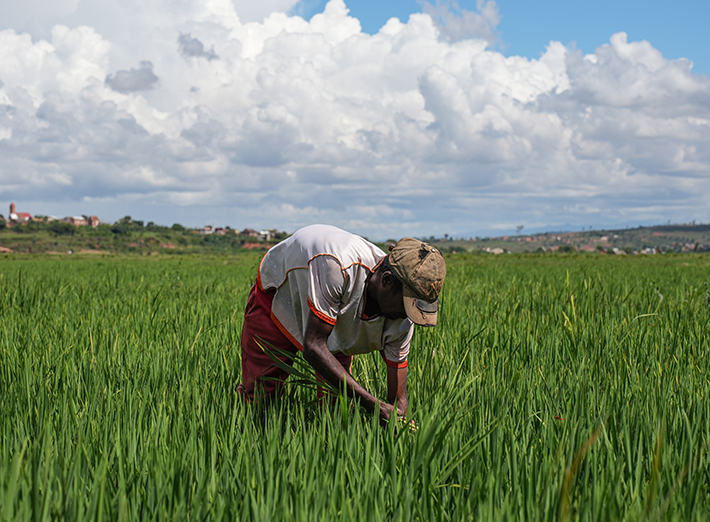
A farmer inspects the growth of rice at the Chinese Hybrid Rice High-Yield Demonstration Base in Mahitsy, Madagascar, on 25 March 2025 (XINHUA)
Poverty has long posed a challenge to human society. For centuries, hunger and deprivation afflicted vast populations across many regions of the world. Poverty not only hinders economic development but also gives rise to a range of social problems, including instability, disease and limited access to education. As a result, it has been widely recognised as a major obstacle to the advancement of human civilisation.
Since the founding of the People’s Republic of China in 1949, the Communist Party of China (CPC) has placed poverty reduction and the pursuit of common prosperity at the centre of its governance. Through decades of sustained effort, China gradually developed a distinctive approach to poverty alleviation. Large‑scale poverty reduction programmes launched during the reform and opening‑up period were later strengthened through a decisive nationwide campaign. Unprecedented in scale and intensity, this effort lifted hundreds of millions of people out of poverty and transformed vast rural regions. As UN Secretary‑General António Guterres once noted, China has made the greatest contribution to global poverty reduction.
The year 2026 marks the fifth anniversary of China’s victory in the battle against absolute poverty. Over the past five years, China has treated this achievement as a new starting point, promoting a smooth transition from poverty alleviation to comprehensive rural revitalisation. By consolidating poverty reduction achievements while advancing rural development, China has created new opportunities for formerly impoverished regions. The country’s experience offers both practical lessons and broader development insights for countries tackling poverty.
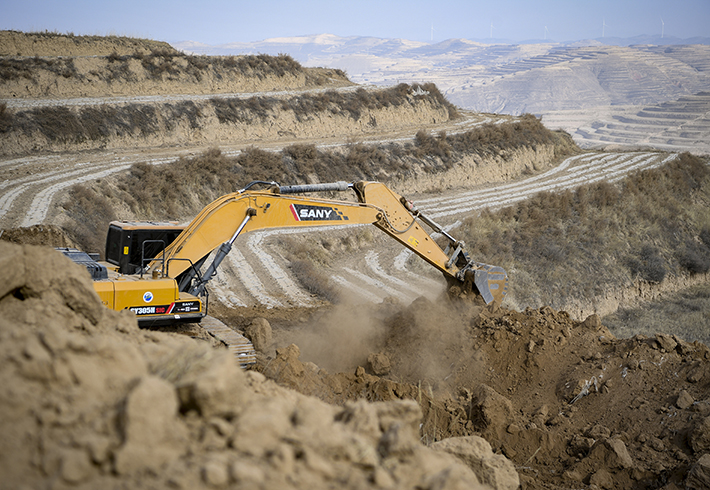
An excavator levels farmland in a village in Guyuan, Ningxia Hui Autonomous Region, on 7 February 2023 (XINHUA)
Hard‑won achievements
China’s poverty alleviation campaign was a people‑centred endeavour. It mobilised the strength of the entire nation, combining central leadership with local implementation and broad social participation.
Starting from the 18th National Congress of the CPC in 2012, the Party placed poverty alleviation at the forefront of national governance and introduced the strategy of targeted poverty alleviation. This approach emphasised identifying poor households accurately, designing tailored assistance measures, and ensuring that policies reached those who needed them most. Through coordinated policies, dedicated programmes and social engagement, China tackled the most difficult pockets of poverty and demonstrated the strong organisational capacity of its governance system.
From a regional perspective, the campaign extended to every impoverished area in the country, including remote mountains, high plateaus and arid desert regions. In many places where poverty had persisted for generations, living conditions were fundamentally transformed. A notable example is the Xihaigu region in Ningxia Hui Autonomous Region, located on the Loess Plateau. The area receives only about 200 to 300 mm of rainfall annually, while evaporation levels reach more than 1,300 mm, creating extremely harsh ecological conditions.
To address the region’s chronic water shortage, the Chinese government implemented a major irrigation project to divert water from the Yellow River. Over time, this initiative brought a reliable water supply to the plateau, supporting agriculture and improving living conditions. Decades of sustained poverty alleviation gradually transformed the once barren landscape. Terraced fields, improved infrastructure and emerging local industries transformed drought‑stricken farmland. By 2020, all nine poor counties in the region had been lifted out of poverty.
China’s poverty alleviation efforts also focused on improving people’s livelihoods in a comprehensive way. Beyond ensuring basic food and clothing, policies also focused on education, health care and housing.
The transformation of Atulie’er Village in Sichuan Province illustrates these changes vividly. Located in the Liangshan Mountains, the village was once known as the “Cliff Village” because residents had to climb fragile vine ladders along steep cliffs to reach the outside world. The journey was dangerous and time‑consuming, and the village lacked basic infrastructure. In 2020, all 84 impoverished households in the village were relocated to a new settlement in the nearby county seat of Zhaojue. Residents moved into safe housing with access to roads, schools and health care services. Children now attend nearby schools without having to climb hazardous cliffs, and all villagers are covered by medical insurance.
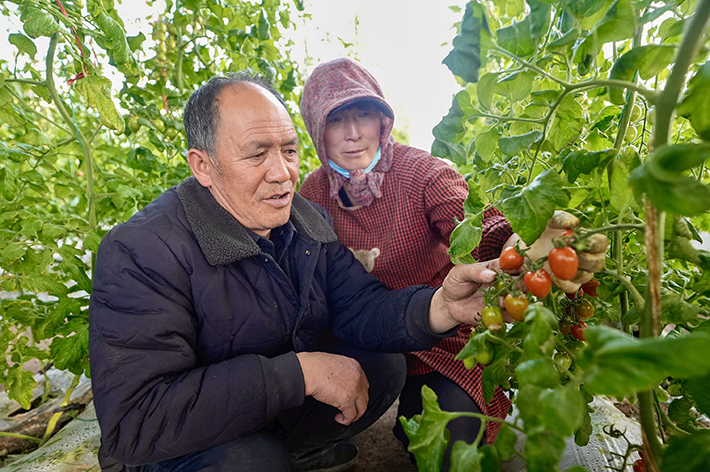
Sta members check the growth of tomatoes inside a greenhouse at an agricultural experience park in Guyuan, Ningxia Hui Autonomous Region, on 2 February (XINHUA)
Global impact
China’s success in eliminating absolute poverty carries significance beyond its borders. After achieving this milestone, the country entered a new stage of development focused on linking poverty reduction achievements to rural revitalisation. This framework provides a path for the long‑term development of formerly impoverished regions while offering a reference for other developing countries seeking to move from poverty reduction towards broader rural modernisation.
China has also actively shared its development experience with the international community. At the 19th G20 Leaders’ Summit in 2024, President Xi Jinping emphasised that developing countries can overcome poverty through sustained effort, patience and determination. China’s success has inspired confidence among many countries in the Global South that poverty can indeed be overcome.
Some developing countries have begun adapting elements of China’s approach. Uzbekistan, for example, drew on China’s “cooperative plus industrial chain” model to develop specialised agriculture and boost rural incomes. The country also introduced policies inspired by China’s targeted poverty alleviation, including the creation of an electronic registry to identify and assist poor households. These measures contributed to lifting 719,000 people out of poverty and significantly lowering the national poverty rate to 8.9 percent in 2024.
Agricultural cooperation has also become an important channel for sharing development experience. In Madagascar, China established a hybrid rice demonstration centre in 2007 under the framework of the Forum on China-Africa Cooperation. Chinese agricultural experts worked with local farmers to promote hybrid rice cultivation and improve farming techniques. The adoption of this technology substantially increased grain yields and helped to address food shortages.

People use a steel ladder in Atulie’er Village, Zhaojue County, Sichuan Province, on 23 November 2019 (XINHUA)
For decades, the Western model of modernisation was often regarded as the primary path to development and prosperity. China’s journey from poverty alleviation to rural revitalisation offers an alternative approach, one that emphasises national conditions, long‑term planning and inclusive development. By pursuing modernisation without external dependence, China has broadened the range of development pathways available to developing countries.
Despite significant progress, poverty remains a serious global challenge. Uneven development, food insecurity and regional disparities continue to affect many parts of the world. Addressing these issues requires stronger international cooperation and shared commitment. China has stated that it will continue to promote the vision of building a community with a shared future for mankind, deepen international cooperation on poverty reduction, and share its development experience with other countries.
Through collaboration, innovation and mutual support, the international community can work towards a world free from extreme poverty. China’s experience demonstrates that sustained commitment and effective policy design can transform even the most difficult conditions. As countries cooperate to promote development, eradicate poverty and improve living standards, new chapters in human progress can unfold.
The author is Associate Research Fellow from Institute of Marxism, Chinese Academy of Social Sciences
| About Us | Contact Us | Advertise with Us | Subscribe |
| Copyright Beijing Review All rights reserved 京ICP备08005356号-5 京公网安备110102005860号 |


