|
||||||||||
| Home Top News Economy/Tech Culture/Sports China in Foreign Eyes Green Development Videos Intangible Cultural Heritages |
|
||||||||||
| Home Top News Economy/Tech Culture/Sports China in Foreign Eyes Green Development Videos Intangible Cultural Heritages |
| ChinAfrica |
| A Shared Vision for Prosperity |
| What Africa can learn from China’s poverty reduction success |
| By Justine Kiska | VOL. 18 June 2026 ·2026-06-02 |
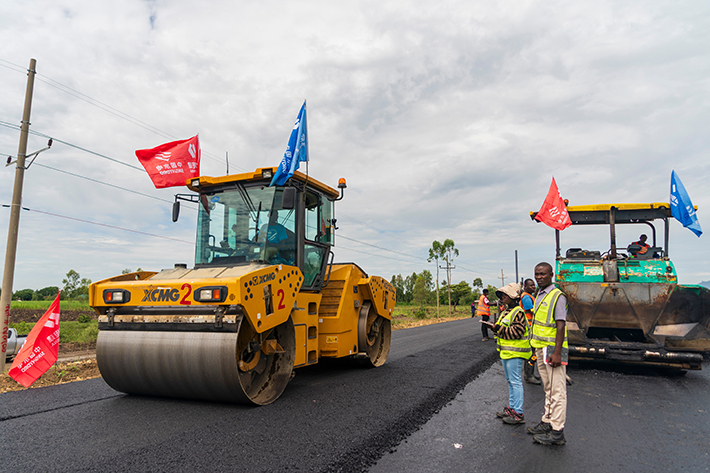
Construction vehicles and workers of Power Construction Corp. of China are seen at the site of a highway project in Kisumu County, Kenya, on 27 February (XINHUA)
For decades, poverty in Africa has been framed as one of the world’s most difficult and enduring challenges. Across global discussions, economic forums and development agendas, the continent has often been viewed through the lens of aid dependency, inequality and underdevelopment. Yet while much of the world continues to debate solutions to poverty, one country has already achieved what many once believed was impossible. China has lifted nearly 800 million people out of extreme poverty over the last four decades, delivering one of the largest economic and social transformations in modern history.
Today, as Africa searches for sustainable pathways towards inclusive growth, the conversation is increasingly shifting from traditional aid models towards long-term economic cooperation, infrastructure investment, industrialisation and strategic development partnerships. In that discussion, China’s experience is becoming impossible to ignore.
But the story of poverty in Africa is not simply one of crisis. It is also one of opportunity.
Africa is entering one of the most important periods in its modern economic history. The continent possesses vast natural resources, some of the world’s fastest-growing urban populations, an expanding digital economy and the youngest population globally. By 2050, Africa is expected to account for a significant share of the world’s working-age population, creating enormous potential for economic growth if jobs, infrastructure and industries can expand fast enough to support this demographic shift.
The question is no longer whether Africa has potential, but how that potential can be transformed into large-scale economic inclusion.
Lessons from China’s experience
China’s poverty reduction model was never built purely on welfare systems or short-term interventions. Instead, it focused heavily on production, industrialisation, infrastructure, agricultural modernisation and long-term economic planning. Entire rural regions were connected to broader markets through roads, railways, ports, logistics corridors, electricity networks and manufacturing hubs. Economic growth was not concentrated solely in major cities, but gradually extended to less-developed provinces and rural communities through targeted development policies.
Perhaps the most important lesson from China’s experience is that poverty reduction was treated as an economic transformation mission rather than only a humanitarian issue. China recognised that sustainable poverty eradication requires productive economies capable of creating employment, expanding trade, increasing domestic manufacturing and integrating citizens into functioning economic systems. This approach transformed millions of lives by creating access to opportunity rather than dependence on temporary support mechanisms.
For Africa, this lesson is particularly important.
Many African economies continue to rely heavily on exporting raw materials while importing finished products. This structure often limits value creation, industrial growth and employment generation within local economies. Natural resources alone cannot eradicate poverty if countries remain dependent on foreign manufacturing and limited industrial processing capacity.
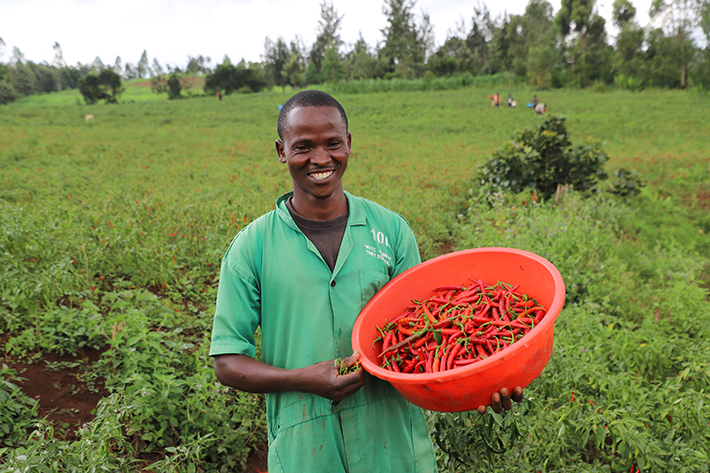
A farmer poses for a photo with freshly picked chilli pepper in Ibiza Village of Kayonza District in Eastern Province, Rwanda, on 14 April (XINHUA)
African efforts
Across Africa, similar efforts are already beginning to emerge. Countries such as Rwanda, Ethiopia, Kenya, Egypt and South Africa have increasingly focused on industrial parks, technology hubs, renewable energy projects, logistics corridors and manufacturing expansion. The African Continental Free Trade Area also represents an important step towards creating larger integrated markets capable of supporting industrial growth across borders.
However, Africa’s transformation requires scale, consistency and long-term partnerships. Over the last two decades, China has become one of Africa’s most significant economic partners. Chinese-backed projects have contributed to major infrastructure developments across the continent, including railways, highways, ports, telecommunications systems, power stations and industrial zones. These projects have helped to improve connectivity, trade capacity and regional integration in multiple African economies.
While debates surrounding debt sustainability and financing structures remain important, there is also a growing recognition that infrastructure itself is essential for long-term poverty reduction.
No country industrialises without energy. No economy grows competitively without logistics. No rural region develops sustainably without transport infrastructure. No modern workforce can thrive without digital connectivity. China understood this reality early in its development journey.
The future of China-Africa cooperation, however, may depend less on construction alone and more on collaboration in areas such as industrialisation, technology transfer, vocational training, agriculture, manufacturing, digital innovation and skills development. Africa does not simply need investment. It needs productive capabilities that can generate jobs, strengthen local industries and expand economic participation at scale.
Agriculture is key
Agriculture remains one of the clearest examples of this opportunity.
A large percentage of Africa’s population still depends on agriculture for income and survival; yet many farming systems continue to face challenges related to irrigation, mechanisation, financing, storage, transport and market access. At the same time, Africa possesses approximately 60 percent of the world’s uncultivated arable land. The potential for agricultural transformation is enormous.
China’s own agricultural reforms played a critical role in reducing rural poverty by improving productivity, increasing farmer incomes, modernising farming systems and integrating rural economies into national growth strategies. If China and African nations deepen collaboration around agricultural technology, food processing, irrigation systems, smart farming and rural logistics, the long-term impact could reshape food security and rural economic development across the continent.
Beyond agriculture, digital transformation may become one of the defining forces in Africa’s next phase of growth.
China’s rise as a global technology and digital commerce leader has demonstrated how digital infrastructure can rapidly accelerate economic participation. Mobile payments, e-commerce, manufacturing technology, fintech innovation and digital platforms helped to connect millions of people to new forms of income and economic opportunity.
Africa is experiencing a similar wave of innovation. Across the continent, fintech companies, mobile banking systems, digital entrepreneurs, AI-driven agricultural solutions and technology startups are reshaping industries at remarkable speed. What remains necessary is greater investment, stronger digital infrastructure, access to capital and industrial policies capable of helping African innovation to scale globally.
At the same time, Africa cannot simply replicate China’s model directly.
China’s governance systems, population dynamics and economic history are fundamentally different from Africa’s 54 diverse nations. Africa’s path towards development must ultimately reflect its own realities, cultures, institutions and priorities.
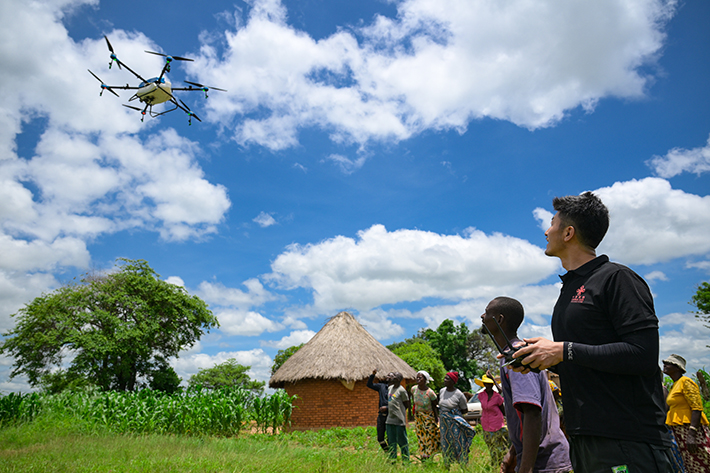
A Chinese agricultural expert demonstrates an agricultural drone to local residents at the China-aided agricultural demonstration village in Zindi, Shamva District of Mashonaland Central Province, Zimbabwe, on 26 January (XINHUA)
High stakes
The continent’s rapidly growing population represents both an extraordinary opportunity and a serious challenge. If Africa successfully combines infrastructure development, industrial growth, digital transformation, education and strategic partnerships, it could become one of the world’s most important economic growth regions over the next several decades.
The relationship between China and Africa is therefore entering a new phase. It is no longer simply about trade or construction projects. Increasingly, it is about shared development goals, long-term economic cooperation and building systems capable of creating sustainable prosperity.
Poverty eradication cannot be achieved through short-term solutions alone. It requires roads, factories, ports, energy systems, schools, technology networks, modern agriculture and industries capable of absorbing millions of young workers. It requires governments willing to think beyond election cycles and businesses willing to invest beyond immediate returns.
China’s development changed global assumptions about poverty reduction. Africa’s future may now depend on how effectively it adapts those lessons to its own unique development journey.
The author is Director and CEO of Africa Talks Business magazine, South Africa
| About Us | Contact Us | Advertise with Us | Subscribe |
| Copyright Beijing Review All rights reserved 京ICP备08005356号-5 京公网安备110102005860号 |


