| ChinAfrica |
| The Bridges of Words |
| How two Chinese universities brought Burundi’s national language into their classrooms and drew two continents closer |
| By Bankuwiha Etienne | VOL. 18 June 2026 ·2026-06-10 |
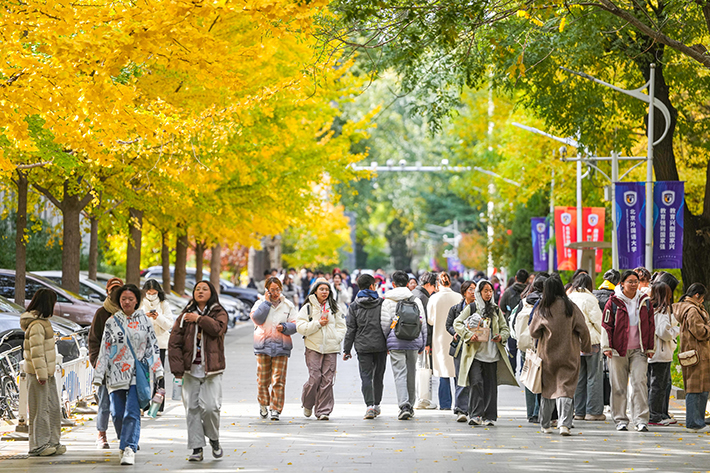
People walk in Beijing Foreign Studies University on 4 November 2024 (XINHUA)
In the spring of 2016, an unusual application arrived at China’s Ministry of Education. Beijing Foreign Studies University (BFSU) proposed establishing China’s first Kirundi language programme. Few in China had ever heard of this Bantu language spoken by millions in Burundi. Yet the proposal would become a milestone in China-Africa cultural exchange.
The proposal had to wait another year for approval, yet the seeds had been planted more than half a century earlier.
China’s journey in teaching African languages began in the 1960s as part of broader efforts to foster understanding between China and newly independent African nations. As noted in BFSU’s Institute of African Studies archives, these programmes aimed to “cultivate talents in traditional African languages and better understand Africa’s ancient history and rich culture.”
When China established diplomatic relations with Burundi in 1963, few could have imagined that six decades later, Chinese students would be studying this East African nation’s national language in Beijing classrooms.
The BFSU application in late 2016 came at a pivotal moment. Burundi had established its Confucius Institute in 2012, introducing the Chinese language and culture to the country. Now China sought to reciprocate.
In March 2017, China’s Ministry of Education officially recognised Kirundi as an undergraduate major. The timing was significant – 2018 marked the 55th anniversary of the establishment of China-Burundi diplomatic relations.
“With Kirundi taught in China,” Chinese Ambassador to Burundi Li Changli observed, “future Chinese diplomats to Burundi can receive proper language training. This serves to promote and consolidate China-Burundi friendship.”
Two universities, two approaches
When classes began in September 2019, two universities set out to teach the same language in very different ways.
At BFSU in Beijing, Kirundi was offered as a third-language elective open to students across disciplines. The schedule was unconventional – two hours on Tuesday evenings and four hours on Sunday afternoons, totalling six weekly hours for four academic credits. A distinctive feature was the pairing of Kirundi with the closely related Kinyarwanda, with teaching materials consistently referring to “Kinyarwanda-Kirundi” to reflect both linguistic similarities and practical learning considerations. The programme mainly targeted second-year students and above. Although plans once included semester-long immersion in Burundi, these have yet to be realised.
Hebei International Studies University (HISU) took a more ambitious approach. Rather than an elective, Kirundi became a required course for selected majors. Initially introduced within the School of English before moving to computer science programmes, the initiative grew rapidly. By 2024, four departments within the School of Computer were offering Kirundi with 10 to 12 weekly teaching hours – roughly double the intensity of BFSU’s programme. Classes of 40 to 50 students became common across freshmen, sophomores and juniors.
HISU’s strength lies in two native-speaking teachers from Burundi, each holding at least a master’s degree and invited directly from Africa to support the programme. The university also organised language competitions and cultural events that brought Kirundi to life.
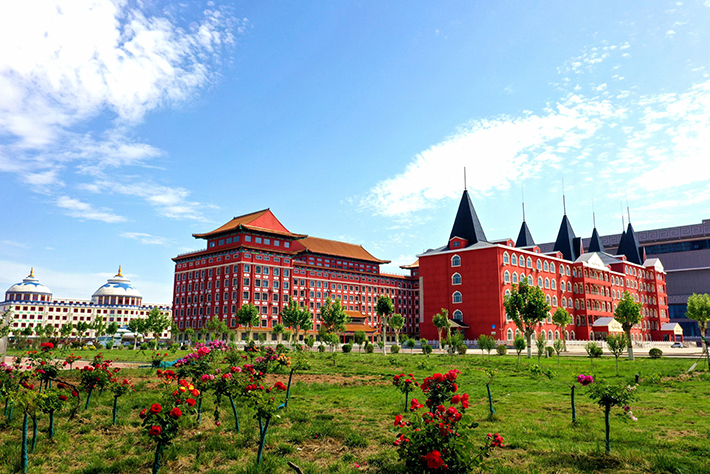
A view of Hebei International Studies University in Shijiazhuang, Hebei Province (COURTESY)
Personal experience
From the students’ perspective, classroom learning quickly turned into personal experience and emotional connection. Li Qianxunan, a computer science major at HISU, recalled that during the 2024 Spring Festival, he learned his Burundian teacher could not return home for the holiday, so he created a Kirundi sticker reading umwaka mwiza (Happy New Year), believing that language can bridge distance at important moments.
In March 2024, the School of Computer launched an online competition titled “Honouring Multiculturalism, Building Language Bridges,” encouraging students to apply their language skills to projects promoting cross-cultural exchange. The submissions showed remarkable creativity, including apps for learning Kirundi vocabulary, cultural posters introducing Burundian festivals and traditional recipes translated into Chinese. A competition participant, Guo Yangxin, noted that learning Kirundi, a Bantu language and one of Burundi’s official languages, helped students to better understand diverse cultures and communication styles, demonstrating the value of studying less commonly taught languages.
From the teachers’ perspective, building the Kirundi programme meant starting almost from scratch. Salvator, a Burundian teacher at HISU, described his 2022 public lesson as an effort to show through dialogue the practical role of Kirundi in China-Africa cooperation, emphasising that language is the foundation of communication.
Meanwhile, China also began developing its own Kirundi instructors. In 2022, BFSU sent its first “future teacher” to the University of Burundi for intensive language and cultural training, undertaking a two-year immersion designed to achieve proficiency beyond what classroom learning alone could provide.
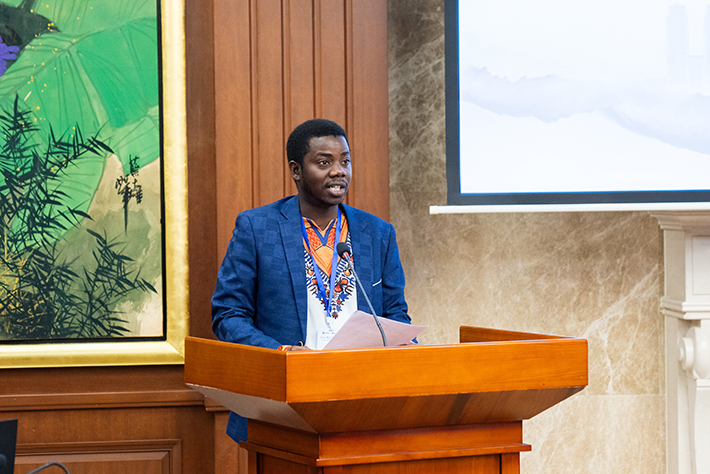
Bankuwiha Etienne (COURTESY)
Connection established
Building a programme around a language that almost no one in China had studied before meant starting with almost nothing – no textbooks, no trained teachers, no established methods. What drove it forward was the conviction that language is where cooperation becomes real.
Despite considerable progress, significant challenges remain. A persistent shortage of qualified Kirundi teachers stems from the absence of formal Burundian government policies supporting Kirundi language education abroad. This gap has created a global scarcity not only of instructors but also of high-quality, standardised teaching materials and approaches tailored for foreign learners.
HISU has addressed this through a dual strategy of targeted recruitment and immersive pedagogical innovation. Recognising the shortage, HISU has systematically recruited native Kirundi speakers as resident instructors, providing a stable core of linguistic expertise.
The university has also pioneered immersive, application-driven learning formats. Its 2024 “Honouring Multiculturalism, Building Language Bridges” competition is a prime example. By structuring contest categories around practical outputs – comics, digital stickers, cultural pattern designs, short videos and posters – the event pushed students beyond rote memorisation and into creative, communicative use of Kirundi.
Chen Shengjie, a computer science major and the top prize winner, explained: “I developed a lightweight Kirundi vocabulary app. Compared to traditional paper materials, it allows for more convenient, on-the-go memorisation. It’s about using the tools of my own major to push language learning forward.” This approach not only builds linguistic skills but also encourages interdisciplinary thinking, showing how technology can help to address resource gaps in less commonly taught language education.
Spoken by virtually all of Burundi’s 12 million people, Kirundi reaches further than its borders suggest. Rwandans can understand it readily, as can communities in eastern Democratic Republic of the Congo and southwestern Tanzania. For China, learning Kirundi is not merely an academic exercise – it is a practical investment in one of East Africa’s most strategically located nations.
As China-Africa cooperation deepens under initiatives such as the Belt and Road, that investment becomes more valuable still. Burundi’s membership in the East African Community and its agricultural, mining and tourism sectors offer growing opportunities for collaboration – opportunities that are easier to pursue when both sides can speak to each other directly.
From that 2016 proposal to today’s classrooms, Kirundi education in China has come a long way. What began as an academic experiment has become a living bridge between peoples.
As Professor Wen Shuo from HISU said: “Every time a student masters urakomeye (how are you) or ndanezerewe ko turi kumwe (I’m happy we’re together), we’re not just teaching vocabulary. We’re nurturing the next generation of China-Africa friendship ambassadors.”
In this 2026 China-Africa Year of People-to-People Exchanges, these Kirundi learners carry more than language skills. They carry the possibility of deeper understanding between continents.
The author is Burundian Sinologist and PhD Student, Nanjing University
| About Us | Contact Us | Advertise with Us | Subscribe |
| Copyright Beijing Review All rights reserved 京ICP备08005356号-5 京公网安备110102005860号 |


